The design challenge
From a repetitive task to an experience worth returning to.
Virtual Fit had to feel technologically advanced without becoming difficult to understand. The design challenge was to connect functional fitness data with the emotional pull of an immersive world.
At a glance
One product story, expressed through atmosphere, feedback, and flow.
The experience model
One fitness concept. Three connected layers.
Virtual Fit was shaped as more than a collection of screens: a clear product story, a visible progress layer, and a changing sense of place.
The product model
Keep the visual ambition of VR connected to the practical needs of fitness.
Make the promise clear.
Introduce immersive fitness through a cinematic first impression.
Make effort visible.
Bring metrics, playlists, recommendations, and controls into one readable layer.
Change the context.
Use environments as a motivational layer around the workout.
The journey
From first impression to the next session.
The experience was shaped as a loop rather than a single conversion moment.
-
01
Discover
Understand the proposition.
Landing experience -
02
Explore
See the role of environments.
Visual narrative -
03
Choose
Select a workout or plan.
Product flow -
04
Enter
Move into a focused space.
VR experience -
05
Track
See effort and progress.
Feedback layer -
06
Return
Find a reason to come back.
Intended loop
01 · Entry experience
Make the future of fitness immediately visible.
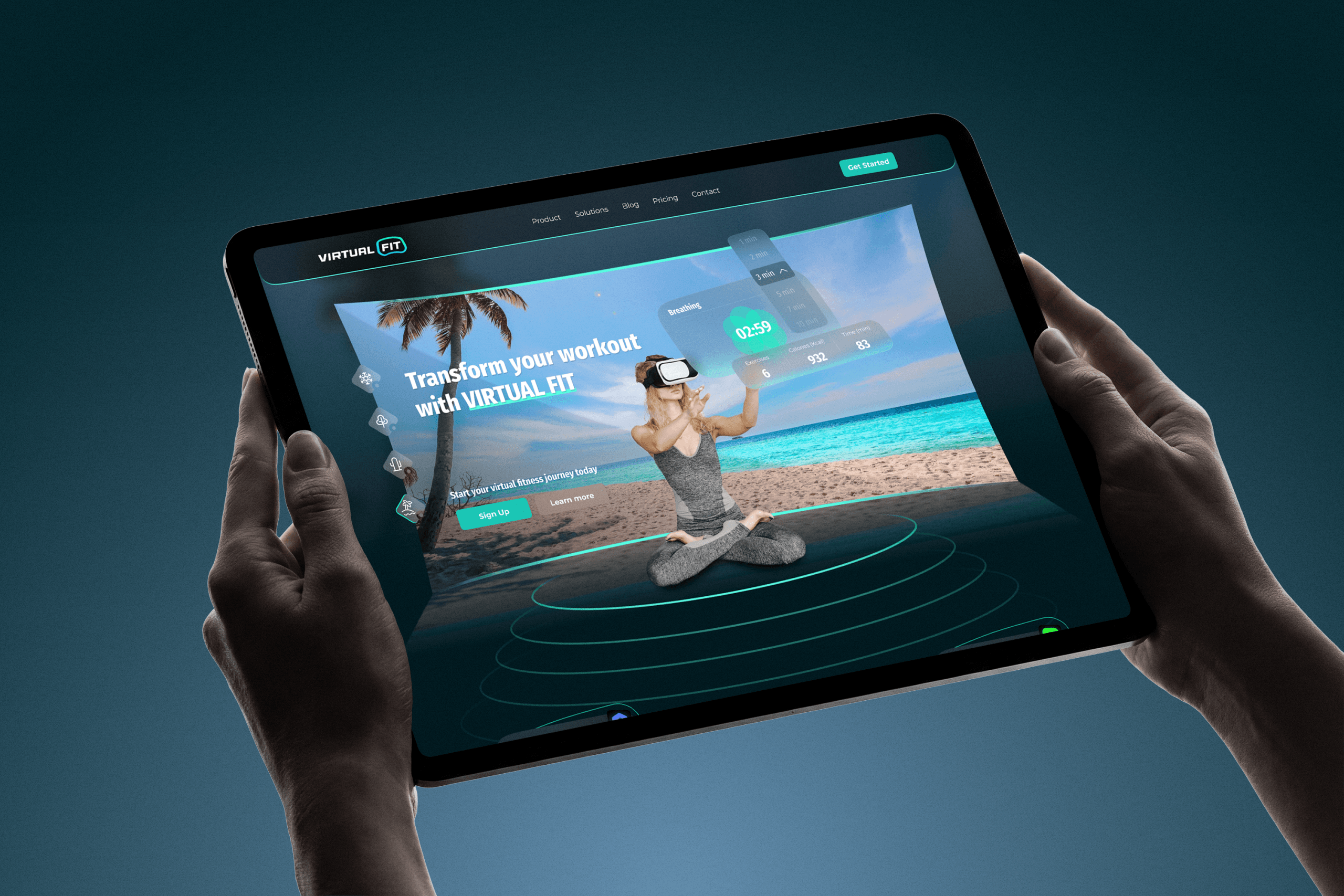
The first impression combines environment, person, interface, and action in one readable visual hierarchy.

Public experience
Explain the product before asking for action.
The landing experience establishes the environment, shows live-looking feedback, and leads the user toward starting or learning more.
Design intent
Turn a new category into a legible first step.
Introduce immersive fitness.
Surface a small amount of progress data.
Keep the next action visible.
02 · Progress layer
Give effort a visible shape.
The progress composition brings together workout controls, music, body metrics, reminders, recommendations, and community-oriented features. Each panel has a clear job inside the larger experience.
The progress layer brings effort, feedback, and personalization into one connected experience.

03 · Immersive environments
Change the context, not just the workout.
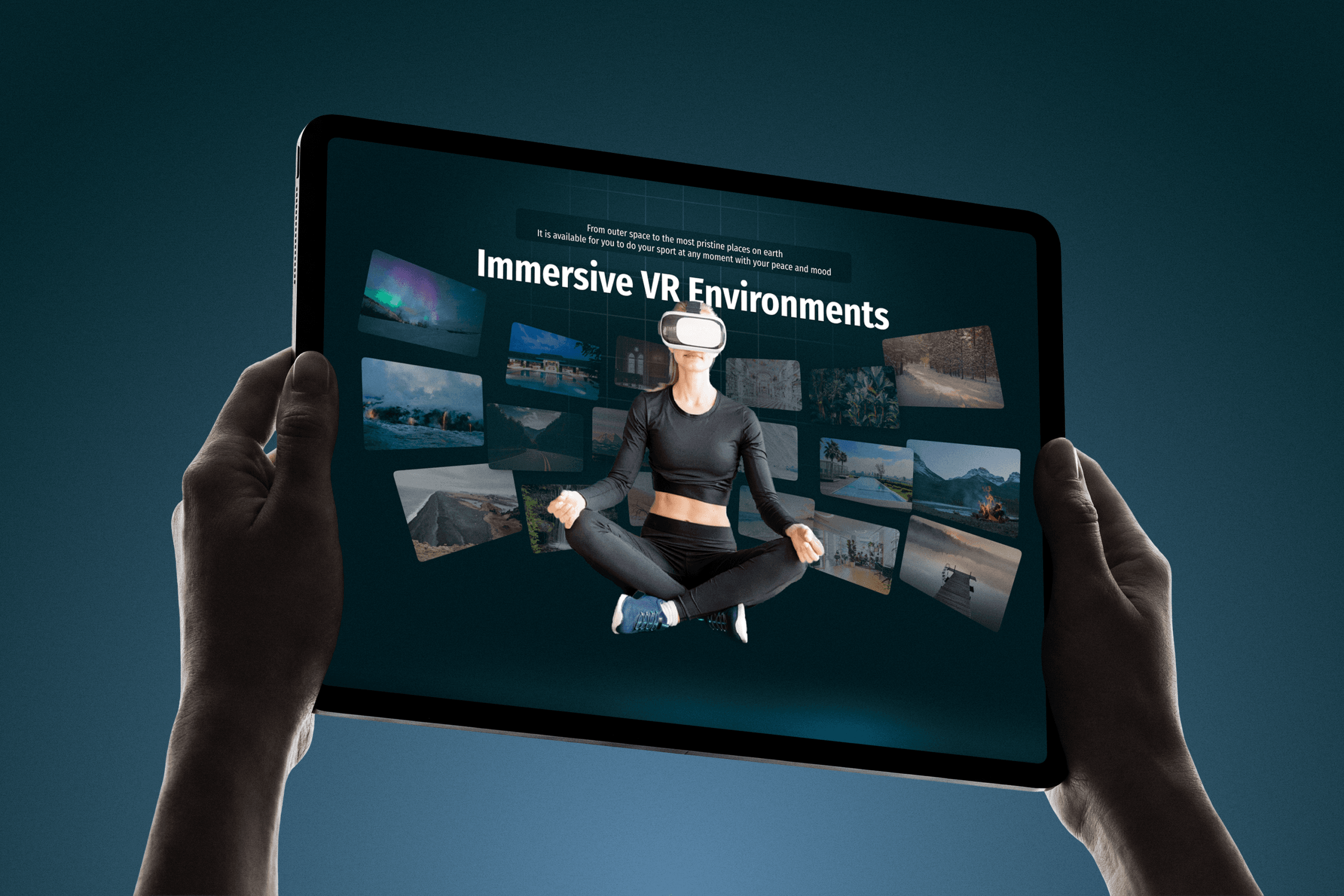
Beaches, forests, mountains, and imagined spaces are presented as destinations around the user. The choice is not only what to do, but where the experience should happen.
- Environment as motivation
- Spatial imagery as product evidence
- Variety as a response to repetition
Visual direction
Future wellness, expressed through depth and light.
The visual system balances expressive imagery with readable product structure.
Gives the environments room to feel expansive.
Identify actions, states, and progress.
Create depth without hiding the world.
Keeps expressive imagery understandable.
04 · Membership and value
Make the next decision easy to compare.
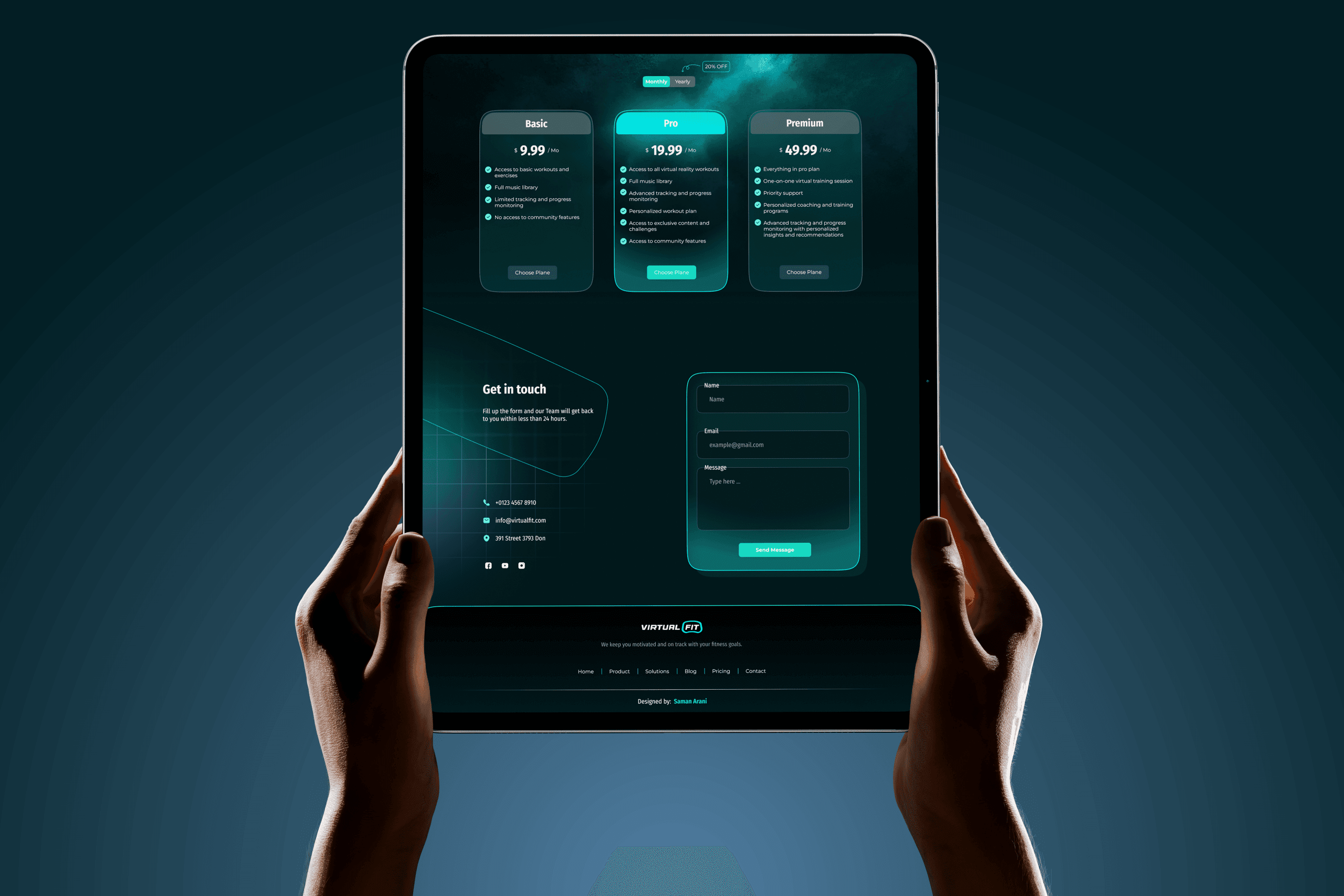
The pricing concept uses clear plan hierarchy, short benefit statements, and a highlighted middle option to keep the commercial decision scannable.
The section keeps plan comparison clear and focused on the next decision.
Product value
A cohesive foundation for a more immersive fitness experience.
Virtual Fit brings entry, progress, environments, and membership into one visual language.
Each layer supports a clearer promise: make movement feel more engaging, more personal, and easier to return to.
Together, the experience creates a strong foundation for future workouts, environments, and personalized journeys.
Reflection
Fitness should feel like an experience you want to return to.
Virtual Fit was an exploration of how immersive design can change the emotional context of an everyday activity. The central principle was simple: use technology to make movement feel more inviting, not more complicated.